

Beyond the Buzzwords: PM Burnout is a Staffing Crisis, Not a Mindset Malfunction
Property management burnout is often misdiagnosed as a personal failing, but it's fundamentally a staffing issue. The expectation of the 'Super-PM' and chronic understaffing create an unsustainable workload, leading to a vicious cycle of turnover. Addressing this requires realistic portfolio sizes, strategic delegation, thoughtful tech integration, and fair compensation.

Why Are We Always Saying Goodbye? The PM Brain Drain Is Real
Property managers are leaving the industry at an alarming rate, driven by burnout, thankless work, and a lack of growth. This brain drain isn't just an annoyance; it's a costly problem impacting resident satisfaction, owner retention, and team morale. Understanding these issues is the first step to building a more sustainable and attractive workplace.


The Burnout Epidemic: It's a Staffing Crisis, Not a State of Mind
Property management burnout isn't a personal failing; it's a systemic staffing problem driven by unrealistic workloads and outdated operational models. The solution lies in strategically disaggregating the property manager role, leveraging remote talent, and integrating automation to create sustainable business models.


Burnout in Property Management: A Systemic Staffing Failure, Not a Personal Flaw
The pervasive burnout in property management is not a personal failing but a systemic staffing problem, driven by unrealistic workloads and a flawed 'lean' operational philosophy. The industry's high turnover and talent scarcity are direct consequences of asking one person to perform the work of many, a model that is neither scalable nor sustainable. Addressing this requires a fundamental shift in how we staff, embracing role redesign, specialization, and strategic use of remote talent and technology to create healthier, more efficient teams.

Burnout Isn't a Mindset Problem, It's a Staffing Disaster
Property management burnout isn't a personal failing or a lack of self-care, it's a direct result of chronic understaffing and unrealistic workloads. We're asked to do the job of multiple people, and the industry's high turnover rates prove it's an unsustainable model.

The Revolving Door: Why Property Managers Are Leaving and What It Means for Your Business
High turnover in property management is more than just a nuisance; it's a critical issue impacting our bottom line, team morale, and service quality. Property managers often leave due to overwhelming workloads, insufficient compensation, unclear career paths, and sometimes, technology that adds to the burden rather than alleviating it. Addressing these root causes is essential for building a stable and successful property management operation.
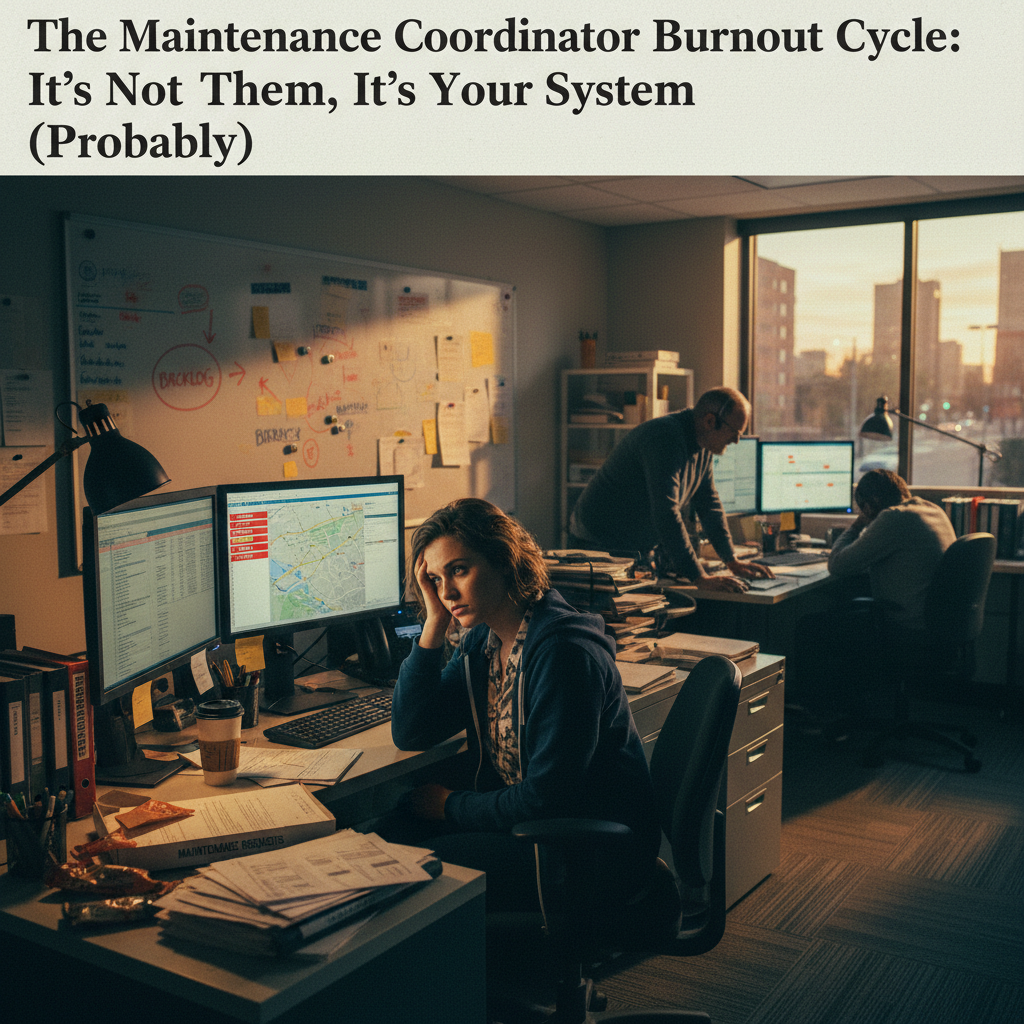
The Maintenance Coordinator Burnout Cycle: It's Not Them, It's Your System (Probably)
Maintenance coordinator burnout is a pervasive problem in property management, often stemming from systemic failures rather than individual performance. Overburdened coordinators handling excessive units lead to mistakes, turnover, and significant operational costs. Breaking this cycle requires automating tasks, defining clear processes, right-sizing workloads, and investing in proper systems and staffing.
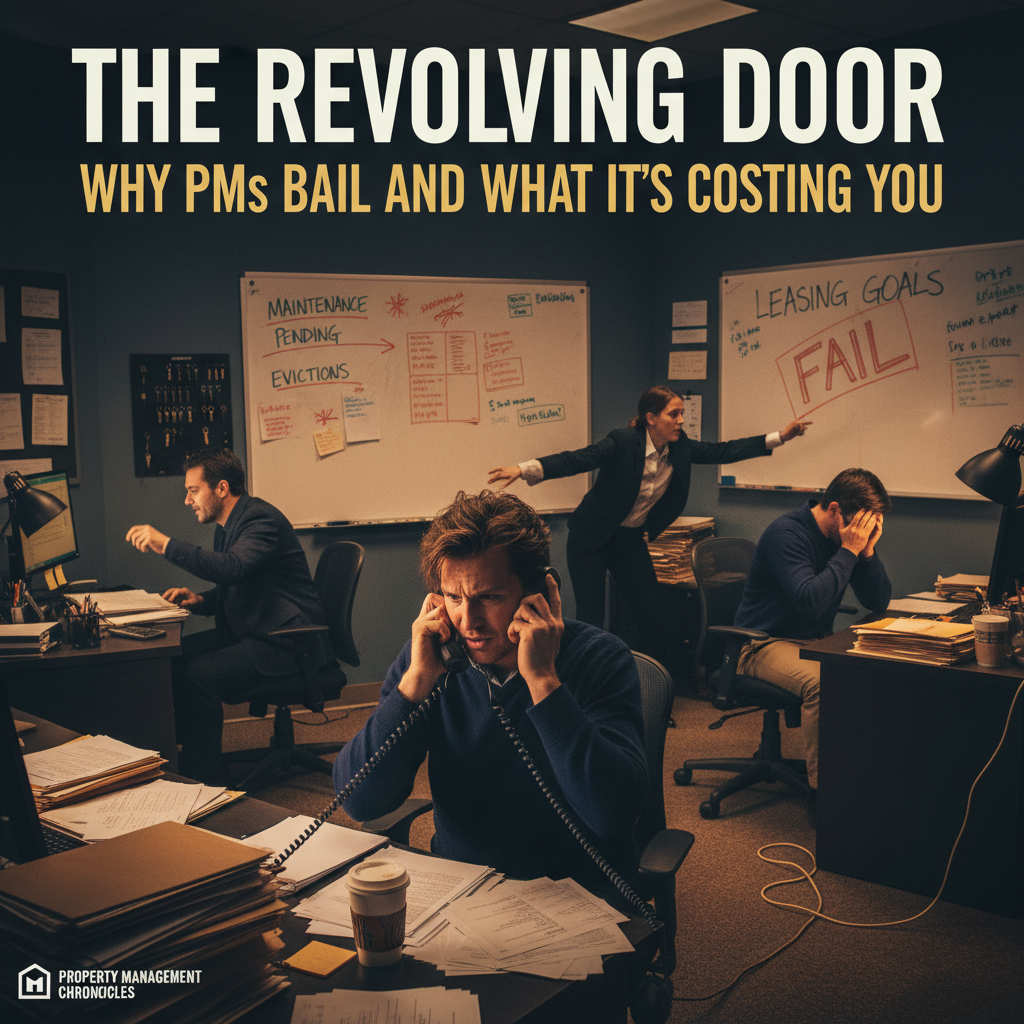
The Revolving Door: Why PMs Bail and What It's Costing You
Property managers are leaving the industry at an alarming rate, costing companies significant money and talent. This exodus stems from unrealistic expectations, a lack of robust systems, and inadequate technological support, turning PMs into overwhelmed 'heroes' rather than supported professionals.