

Alright, another Google I/O has come and gone, and the tech news cycle is buzzing about Gemini AI advancements and Android XR smart glasses. My inbox, predictably, is full of questions from property managers asking, "Is this actually useful, or just more shiny objects?" Good question. Let's cut through the hype and talk about what this means for managing doors, not just pixels.
First, let's tackle Gemini AI. Google's big push this year was around making Gemini more 'agentic' and deeply integrated across their ecosystem. What does 'agentic' actually mean? Think of it less as a chatbot that answers questions and more as a digital assistant that can do things, often chaining multiple steps together, making decisions along the way. We're talking about AI that can understand intent, plan, execute tasks, and even course-correct. The demos were slick, showing it booking flights, summarizing complex documents, and even helping with coding. The gap between demo and reality is always wide, but the direction is clear.
For property management, this agentic AI evolution is where things get interesting. Imagine a scenario where a tenant emails about a leaky faucet. Today, that often goes to a human, who then logs into the property management software, creates a work order, finds a vendor, schedules, and communicates back. It's a multi-step, often interrupted workflow. With a truly agentic Gemini, you could have an AI agent that:
- Ingests the tenant email: Understands the problem, identifies the property and unit.
- Checks lease agreements and warranty info: Determines if it's a tenant responsibility or owner responsibility, checks appliance warranty if applicable.
- Consults vendor database: Finds an available, qualified plumber in the area, cross-referencing past performance and pricing.
- Schedules the repair: Integrates with the vendor's calendar and the tenant's availability (via a quick, automated back-and-forth).
- Creates the work order: Automatically populates all necessary fields in your AppFolio, Buildium, or Yardi system.
- Communicates updates: Notifies the tenant, owner, and property manager of the scheduled time, vendor, and expected completion.
- Follows up: Post-repair, sends a satisfaction survey, and closes the loop.
This isn't just about drafting emails faster. This is about automating entire, complex workflows that currently eat up hours of staff time. This is the promise of genuine property management workflow automation that goes beyond simple rule-based systems. For enterprise-level property management companies, the ability to deploy hundreds or thousands of these 'micro agents' (as some are calling them, and yes, the market for them is projected to hit $7.9 billion by 2036) to handle routine tasks across a massive portfolio could be transformative. It frees up your human teams for higher-value activities: tenant relations, owner communication, strategic planning, and complex problem-solving.
Now, about Android XR smart glasses. This is where my inner nerd really lights up, but also where the practical application for PM gets a bit more... speculative in the short term. Google's vision for XR (Extended Reality, encompassing VR and AR) is about blending the digital and physical worlds. Imagine wearing glasses that overlay digital information onto your real-world view. The demos showed things like real-time translation during conversations, navigation arrows on the sidewalk, and even virtual screens floating in your living room.
For property management, the immediate use cases might seem limited, but let's think a few years out. I see two main areas:
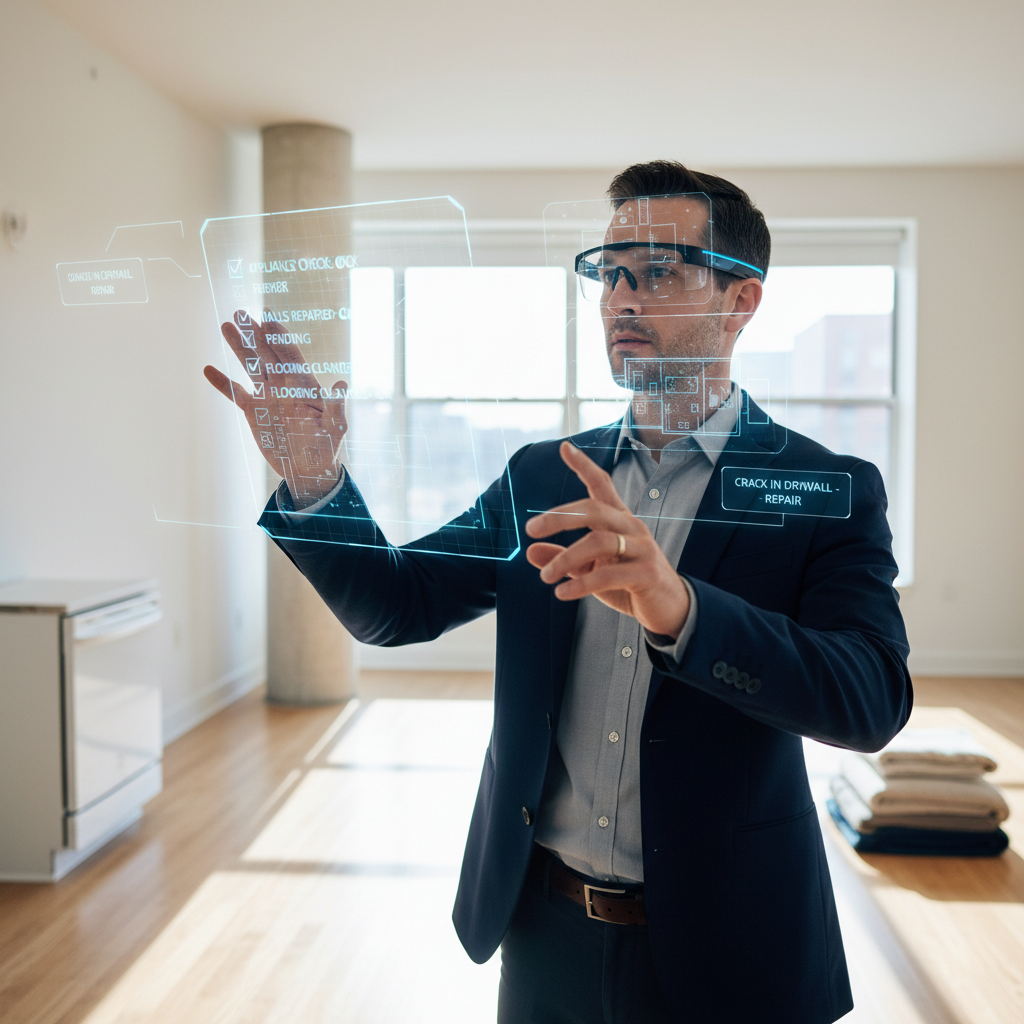
- Maintenance and Inspections: A maintenance tech wearing XR glasses could have schematics of an HVAC unit overlaid directly onto the physical unit they're working on. Step-by-step repair instructions, part numbers, and even a live video feed to a senior technician for remote assistance could all be presented contextually. This could significantly reduce diagnostic time and improve first-time fix rates. For inspections, imagine walking through a unit and having the glasses automatically highlight areas of concern based on previous inspection reports or common issues, or even measure dimensions and identify fixture types, all hands-free. This could be a game-changer for standardizing and accelerating property inspections.
- Virtual Showings and Onboarding: While we've had VR tours for a while, XR takes it a step further. A prospective tenant could walk through a vacant unit with a virtual overlay showing furniture arrangements, highlighting amenities, or even providing interactive information about the neighborhood. For new tenants, an XR onboarding experience could guide them through the property, pointing out fuse boxes, water shut-offs, and how to operate appliances. This could reduce the need for physical walkthroughs and answer many common questions proactively.
I'll admit, the smart glasses are still a few iterations away from being truly practical for widespread PM use. They're expensive, battery life is a concern, and the social acceptance isn't quite there yet. But the underlying technology, especially the spatial computing and contextual AI, is something to watch. It's the kind of tech that could eventually change how we interact with physical spaces, which is, you know, kind of what property management is all about.
So, what's the takeaway? Don't rush out and buy a fleet of smart glasses for your maintenance team tomorrow. That's not practical. But do start thinking about how agentic AI can transform your back-office operations. This is where the immediate, tangible ROI lies. Look at your most repetitive, multi-step workflows. Think about tenant communication, work order management, even parts of your leasing process. The advancements in AI, particularly in its ability to act autonomously and intelligently, mean that property management automation is no longer just about setting up auto-responders. It's about building intelligent systems that can handle a significant portion of your operational load, freeing up your team to focus on the human elements of the business. This is also why we're seeing continued growth in offshore staffing for property management and the rise of the virtual property manager role, as companies look to optimize human capital alongside these new AI capabilities.
Start small, identify a single, painful, repetitive process, and explore how these new agentic AI capabilities (often available through APIs from Google, OpenAI, or Anthropic) can begin to automate it. The future of property management isn't just about faster software, it's about smarter operations. And this I/O just gave us a glimpse of how much smarter things are about to get.