

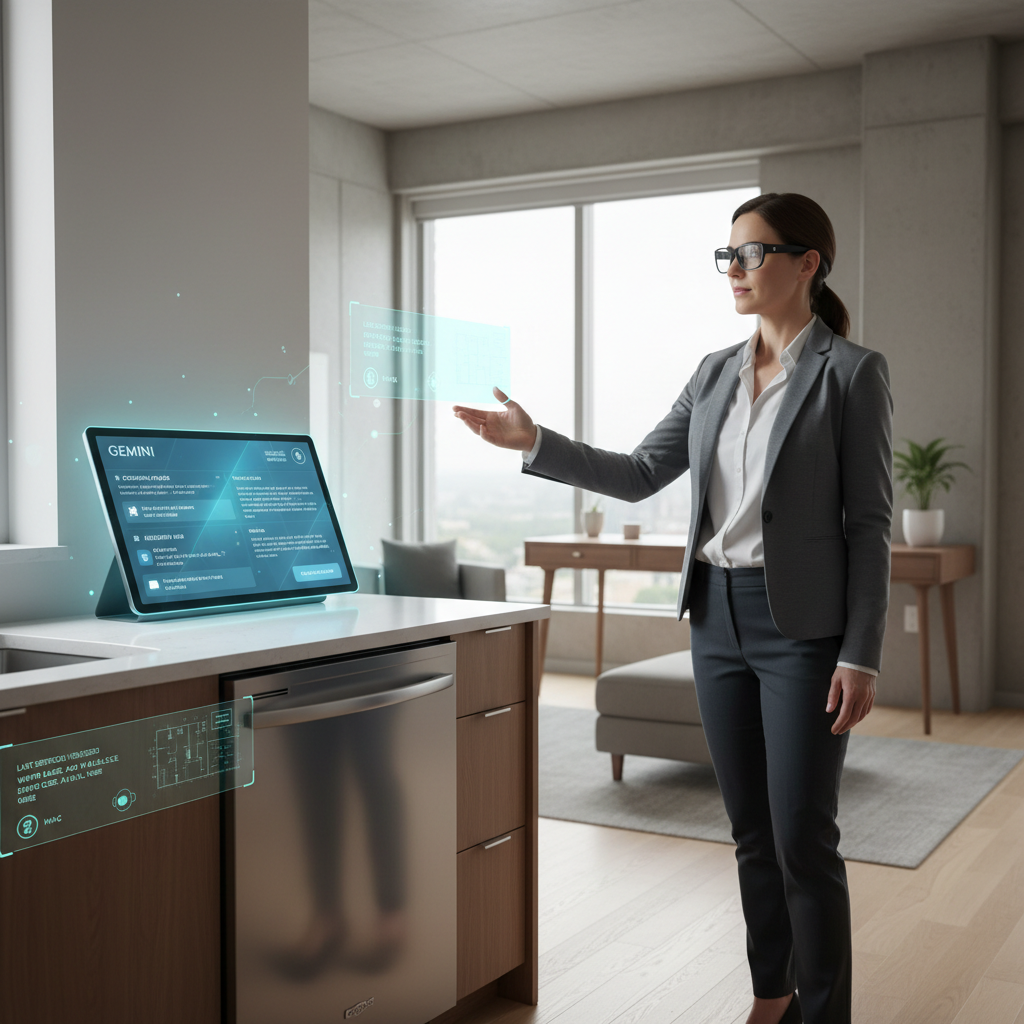
Alright, let's talk about Google I/O 2026. The tech press, like Mashable SEA, is buzzing about Gemini updates and Android XR glasses. My job, as always, is to cut through the hype and tell you what this actually means for property management companies, whether you're handling 200 doors or 5,000.
First, the Gemini news. Google's LLM, Gemini, is getting smarter, faster, and more integrated. This isn't just about better chatbots on your phone, though that's part of it. We're talking about a significant leap in multimodal AI capabilities. For us in property management, this translates directly into more sophisticated property management automation possibilities.
Deeper Automation with Enhanced Gemini
Think about the sheer volume of unstructured data we deal with daily: tenant emails, maintenance requests with blurry photos, lease clauses, market reports, social media sentiment. Right now, many PM companies use AI for basic sentiment analysis or to draft simple email responses. With a more powerful Gemini, we're looking at:
- Advanced Document Analysis: Imagine Gemini not just extracting keywords from a lease, but understanding the implications of specific clauses. For example, if a tenant sends a notice to vacate, Gemini could instantly cross-reference the lease for notice periods, early termination penalties, and automatically trigger the next steps in your workflow, like scheduling a move-out inspection or drafting an early termination agreement for review. This goes beyond simple parsing, it's about contextual understanding.
- Proactive Issue Detection: Gemini's multimodal capabilities mean it can process text, images, and even video. A tenant submits a maintenance request with a photo of a leaky faucet. Gemini could analyze the image, identify the type of fixture, cross-reference common issues for that fixture, check warranty information, and even suggest potential causes or temporary fixes before dispatching a technician. This isn't just about routing a ticket, it's about intelligent triage and potentially reducing unnecessary service calls.
- Personalized Resident Communications: Forget canned responses. A more advanced Gemini could analyze a resident's history, their communication style, and the context of their inquiry to generate highly personalized and empathetic responses. This could range from explaining a rent increase based on local market trends to offering solutions for noise complaints that align with lease terms and community policies. It's about maintaining that human touch, even when scaling.
Now, a quick dose of reality. While the potential for Gemini to revolutionize property management workflow automation is huge, implementation isn't a drag-and-drop affair. It requires clean data, well-defined processes, and often, custom fine-tuning of these models to your specific portfolio and regional regulations. You can't just unleash a general-purpose LLM on your tenant data and expect magic. It's more like training a highly intelligent intern who needs to learn your company's specific rules and nuances.
Android XR Glasses: The Augmented Reality PM
This is where things get really interesting, and frankly, a bit sci-fi. Android XR glasses, Google's entry into augmented reality wearables, could transform how on-site teams, maintenance technicians, and even virtual property manager staff interact with physical properties.
Picture this:
- Maintenance Techs with Superpowers: A technician arrives at a unit. Through their XR glasses, they see an overlay of the apartment's maintenance history, schematics of the HVAC system, and even real-time sensor data from smart appliances. Step-by-step repair instructions appear overlaid on the physical object they're working on. They could even live-stream their view to a senior technician or a virtual assistant for immediate remote guidance, reducing misdiagnoses and repeat visits.
- Virtual Showings and Inspections: Imagine a leasing agent, or even a prospective tenant, walking through a vacant unit. The XR glasses could overlay digital furniture, highlight nearby amenities, display lease terms, or even show a 3D model of a planned renovation. For inspections, a property manager could conduct a virtual walk-through, with the glasses highlighting potential issues based on previous inspection reports or common wear and tear patterns, all without physically being on site. This could be a game-changer for companies exploring offshore staffing for property management, allowing remote teams to have a much richer, immersive understanding of a property.
- On-Site Staff Training: New hires could receive interactive, augmented reality training directly in the field. Instead of just reading a manual, they could see digital prompts and instructions overlaid on physical objects, guiding them through tasks like setting up a new smart thermostat or troubleshooting a common resident issue.
Of course, there are hurdles. Cost, comfort, and privacy concerns are real. Are tenants going to be comfortable with a technician wearing glasses that might be recording? How do we ensure data security when sensitive property information is being displayed in augmented reality? These aren't trivial questions, and they'll need to be addressed as the technology matures.
The Blurring Lines: AI Agents and the Future
What Google I/O 2026 really signals is the accelerating shift towards agentic AI, where AI systems don't just respond to prompts but can autonomously plan and execute multi-step tasks. We're seeing this trend across the board, with companies like IBM talking about advancing the agentic era and others focusing on agentic workflow for enterprise automation. This means AI isn't just a tool, it's becoming a digital colleague capable of taking initiative.
For enterprise PM companies, integrating these advanced AI agents into existing ERPs and property management software platforms will be key. Smaller operators might find more immediate value in off-the-shelf solutions that embed these capabilities into their daily tools, rather than building custom integrations. The gap between what's possible and what's practical for different scales of operation is something I'm always watching.
My honest take? The Gemini advancements are closer to immediate, practical utility for most PMs, especially in refining communication and internal workflows. The XR glasses, while incredibly exciting, are probably still a few years out from widespread, cost-effective adoption in our industry. But make no mistake, the future of property management will be deeply intertwined with these technologies. The question isn't if they'll change things, but when and how you'll adapt your operations to embrace them.