

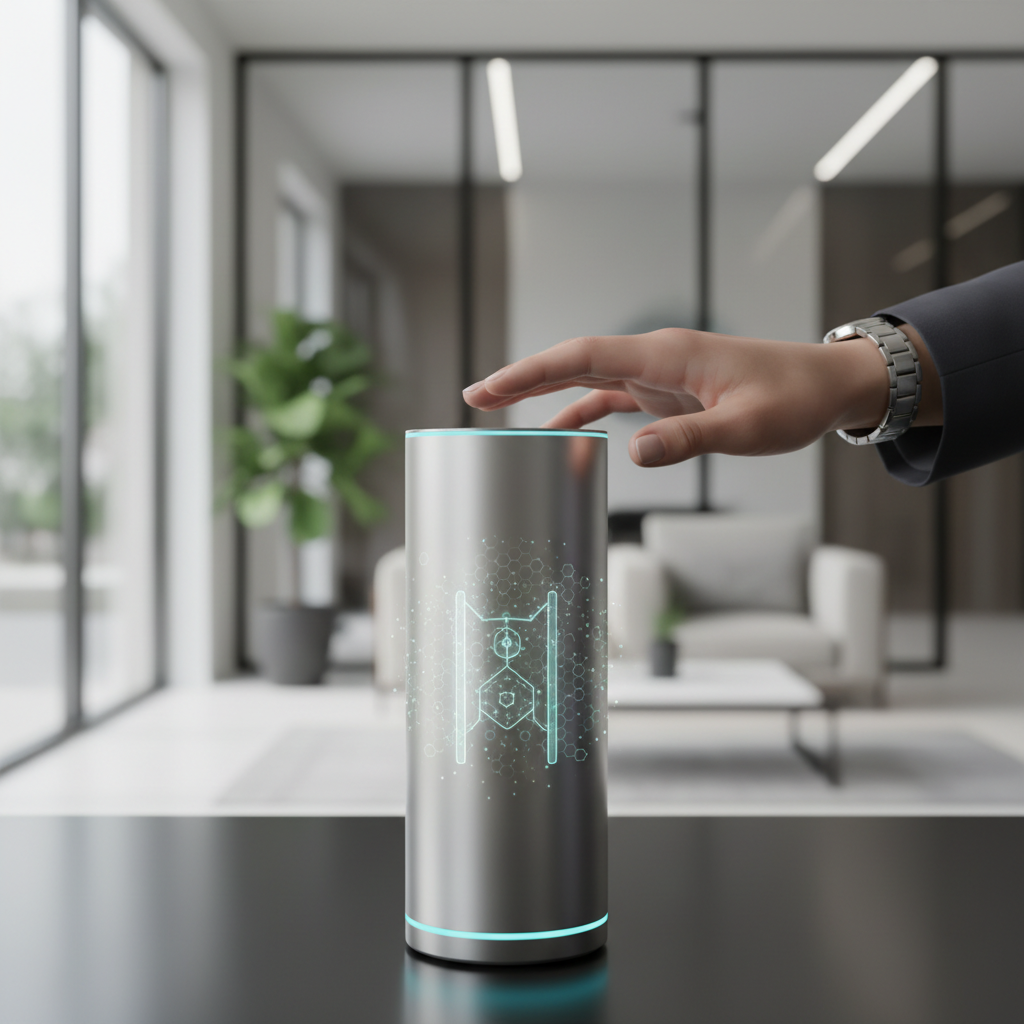
Alright, folks, let's talk about something that sounds like it belongs in a sci-fi novel but actually has real, tangible implications for how you'll be interacting with AI in your property management business very soon. I'm talking about the recent buzz around "Benchmaxxer Repellant" being added to the Open ASR Leaderboard. If your eyes just glazed over, don't worry, I'll translate the tech-speak into PM-speak.
First, a quick primer: ASR stands for Automatic Speech Recognition. It's the tech that lets your phone transcribe your voice, or that powers your smart speaker. The "Open ASR Leaderboard" is basically a public scoreboard where different ASR models compete to see who's best at accurately transcribing speech. It's how researchers and developers know whose tech is winning. Now, "Benchmaxxer Repellant" is a fancy way of saying they're adding new, tougher tests to this leaderboard. These tests are designed to catch models that are overfitting to common benchmarks, meaning they perform great on the specific test data they've been trained on, but might fall apart in the real world. Think of it like a property manager who aces their state exam but then can't handle a real tenant dispute without a script. Not ideal, right?
Why This Matters for Property Managers
So, why should a property manager running 200 doors care about some obscure AI benchmark? Because the quality of ASR directly impacts almost every voice-enabled AI tool you might consider for your business. And let's be honest, voice is where a lot of the future interaction with AI is headed. From automated answering services to smart home integrations, even just dictating notes into your property management software, ASR is the backbone.
Here's the rub: if an ASR model is a "benchmaxxer," it means it might perform beautifully in a demo video, transcribing perfectly clear, pre-recorded speech. But when your tenant calls in with a thick accent, background noise from their kids, or a frantic tone about a burst pipe, that "benchmaxxer" model might just completely botch the transcription. And a botched transcription means a misrouted call, a misunderstood maintenance request, or worse, a frustrated tenant who feels unheard. We've all been there, trying to decipher a garbled voicemail, and AI should be making that easier, not harder.
The Hype vs. Reality Check
I've seen countless AI demos where the voice interaction is flawless. The AI understands every nuance, responds perfectly. It's like watching a magic show. But then you try to implement it yourself, and suddenly, your AI assistant thinks "leaky faucet" is "lucky sausage." This new "repellant" is a direct response to that gap between demo and reality. It's pushing AI developers to build more robust, real-world ready ASR systems. This is a good thing, even if it means some models will look worse on the leaderboard for a bit.
For property managers, this translates into a few key areas:
-
Automated Tenant Communication: Imagine an AI answering service that can accurately transcribe a tenant's urgent maintenance request, even if they're speaking quickly or emotionally. Or an AI that can understand complex questions about their lease agreement or payment schedule. Better ASR means fewer miscommunications and a smoother experience for your tenants. This is crucial for maintaining good tenant relations, which, as we all know, can significantly impact turnover rates.
-
Maintenance Triage and Dispatch: If your AI can accurately transcribe "the water heater is leaking all over the basement floor," that's a high-priority, immediate dispatch. If it hears "the water heater is licking all over the basement door," well, you might have a very confused handyman on your hands. Improved ASR, tested against real-world audio, means more reliable automated triage, saving you time and preventing small issues from becoming big, expensive ones.
-
Voice-Enabled Documentation: Many of us are still typing notes into our CRM or PM software after calls or inspections. Voice-to-text has been around, but often requires careful speaking or correction. As ASR improves, you'll be able to dictate detailed inspection reports, tenant interaction summaries, or even marketing copy for new listings with much greater accuracy, speeding up your administrative tasks. Think of the time saved not having to type out every detail after a property walk-through.
-
Smart Home Integration: As smart home tech becomes more prevalent in rental units, tenants will expect to interact with it via voice. An AI that can reliably understand commands like "turn off the living room lights" or "set the thermostat to 72 degrees" regardless of accent or background noise is essential for tenant satisfaction and reducing support calls. This also ties into the broader trend of proptech adoption in the rental market.
What You Should Do About It
So, what's the practical takeaway for you, the busy property manager? You don't need to become an ASR expert, thankfully. But you do need to be a more discerning consumer of AI tools.
-
Ask for real-world demos: When a vendor pitches an AI solution with voice capabilities, don't just accept their polished demo. Ask them about their ASR's performance in noisy environments, with different accents, or emotional speech. Ask if their underlying ASR models are tested against diverse, challenging datasets. If they can't answer, or if they deflect, that's a red flag.
-
Pilot programs are your friend: Before you roll out a voice AI solution company-wide, run a small pilot. Test it with a diverse group of tenants and staff. Pay close attention to transcription accuracy and how well the AI understands context. Don't be afraid to give feedback, and be prepared to iterate. The AI community thrives on real-world data.
-
Understand the limitations (for now): Even with "Benchmaxxer Repellant," AI is not perfect. There will still be instances where a human touch is needed. The goal isn't to replace humans entirely, but to augment them, freeing up your team for the complex, empathetic tasks that AI still struggles with. Don't expect magic, expect improvement.
This move to add tougher benchmarks is a sign of the AI industry maturing. It means less smoke and mirrors, and more focus on building truly robust, reliable systems. For us in property management, it means the AI tools coming down the pipeline will be more capable and less frustrating. It's a step towards AI that works for you, not just at you. And frankly, after some of the clunky AI experiences I've had, I'm all for anything that makes AI less of a benchmaxxer and more of a real-world champion.