

AppFolio vs Buildium: What Nobody Tells You About the Switch
Making the leap from one property management software to another can feel like navigating a labyrinth blindfolded. For many property managers, the choice often boils down to two industry giants: AppFolio and Buildium. While both platforms promise streamlined operations and enhanced efficiency, the nuances of switching are rarely discussed in depth. This article aims to shed light on the unspoken realities of migrating between these systems, offering a candid look beyond the marketing brochures.
The initial appeal of switching often stems from a perceived lack of features in one system or the promise of a more intuitive user experience in another. For instance, a property manager might find their current software, say Buildium, excellent for basic accounting and tenant communication, but lacking in advanced reporting or portfolio-wide analytics that AppFolio might offer. Conversely, an AppFolio user might feel overwhelmed by its comprehensive suite and seek the simpler, more direct interface of Buildium for a smaller portfolio. Understanding these core differences is the first step.
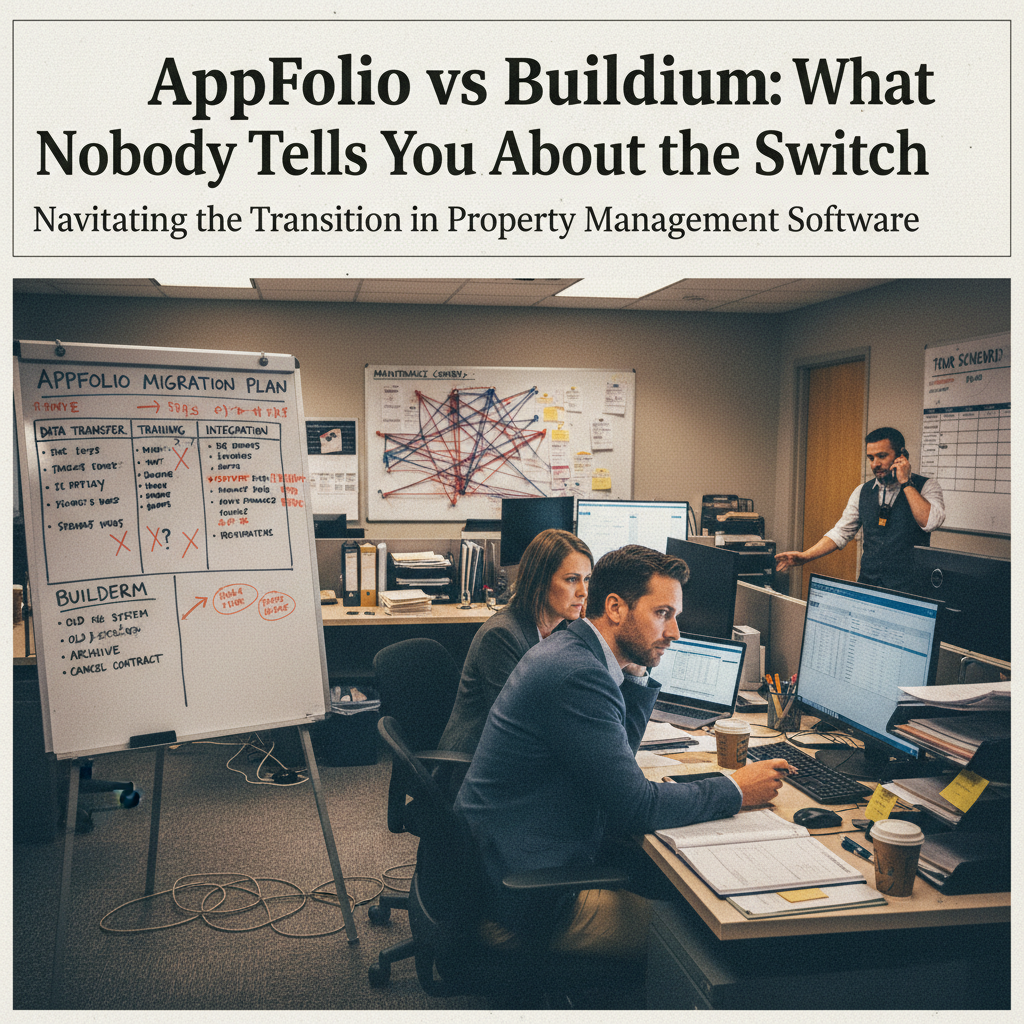
One of the most significant hurdles is data migration. This isn't just about exporting a CSV and importing it elsewhere. It involves ensuring that tenant ledgers, lease agreements, maintenance histories, and vendor details are accurately transferred without corruption or loss. Both AppFolio and Buildium have data migration teams, but the process can be time-consuming and often requires significant input from your staff. Expect a period of parallel operation or intense data verification. Many property managers underestimate the sheer volume of data involved and the potential for discrepancies, especially with historical financial records.
Training and adoption are another critical, often overlooked, aspect. Even if the new software is "intuitive," your team will need time to adjust. Muscle memory built over years with one system doesn't simply vanish. Comprehensive training sessions, creating internal knowledge bases, and allowing for a grace period where mistakes are expected are crucial. Without proper planning, a switch intended to boost efficiency can initially cripple productivity. User communities, like the ones found on Reddit's r/PropertyManagement, often highlight these challenges and offer peer advice.
Cost is, of course, a major factor, but it extends beyond just the monthly subscription fee. Consider the costs associated with data migration services, potential downtime during the transition, and the productivity dip during the learning curve. Some platforms, like AppFolio, might have a higher entry price point but offer unlimited units or advanced features that justify the investment for larger portfolios. Buildium, on the other hand, often appeals to smaller to mid-sized operations with its tiered pricing structure. Always request a detailed breakdown of all potential costs, including any setup or migration fees.
Finally, consider the long-term strategic fit. Are you planning significant growth? Do you need integrations with specific smart home devices or advanced marketing tools? While both AppFolio and Buildium are robust platforms, their ecosystems and integration capabilities differ. AppFolio, for example, often boasts a wider array of integrations with third-party apps for things like utility management or online leasing. Evaluate not just your current needs, but where you envision your property management business in the next 3-5 years. The "best" software isn't just about features today, but about scalability and adaptability for tomorrow.