

The market is a strange beast these days. We're seeing a housing market with two minds, as one analysis put it, with some areas cooling while others remain fiercely competitive. This kind of volatility, coupled with rising operational costs and a relentless push for efficiency, means property management companies aren't just looking at their tech stack anymore. They're scrutinizing it. With a magnifying glass. And a chainsaw. Because what worked even a year ago is probably already obsolete.
It's May 2026. The conversation isn't about if you're using AI, but how deeply it's embedded. And for enterprise PM companies, that 'how deeply' is dictating their entire operational structure. The days of a monolithic, all-in-one software solution being the holy grail are, frankly, over. Or at least, they're being challenged by a more agile, API-driven approach.
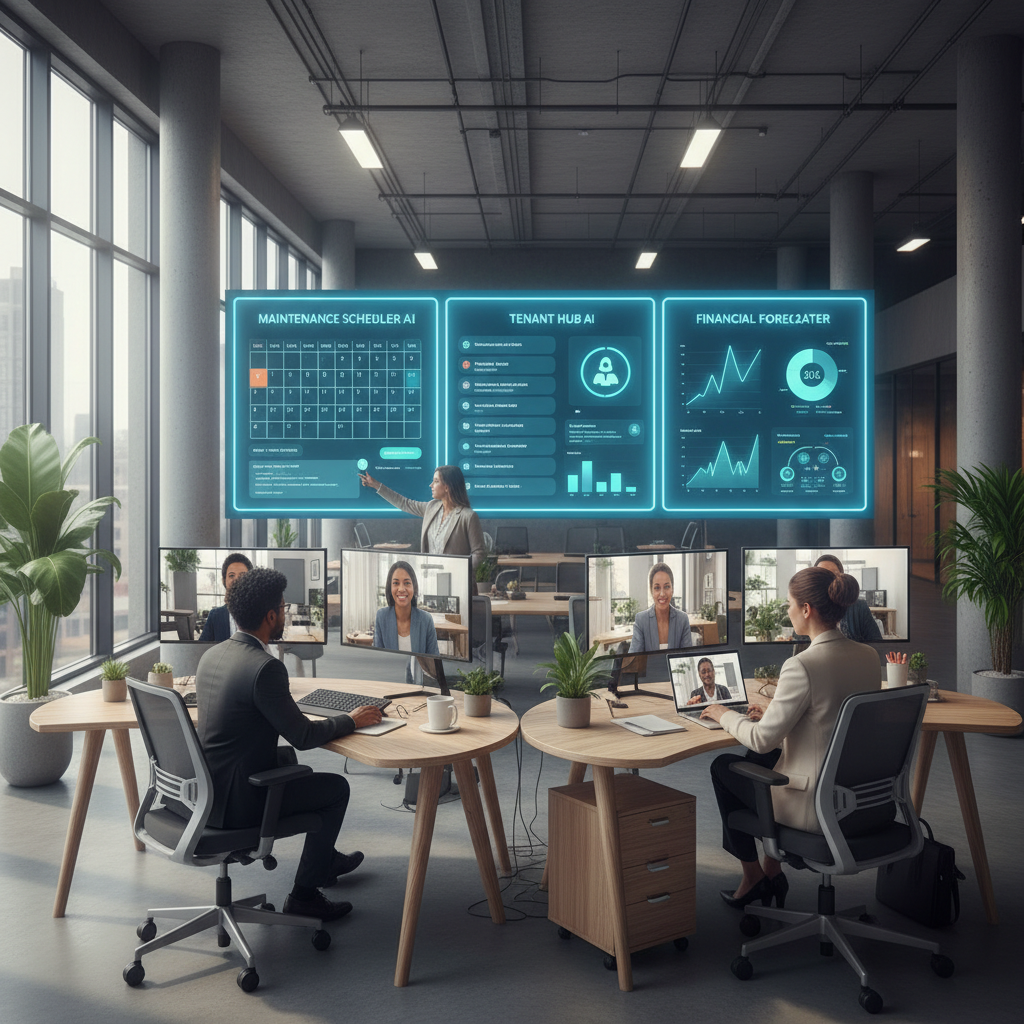
We're seeing a clear shift towards a modular tech stack. Think of it like this: your core property management software, whether it's AppFolio, Yardi, or something else, becomes the central nervous system. It holds the fundamental data. But the real intelligence, the operational muscle, that's being offloaded to specialized AI applications and integrated services. AppFolio, for example, is still topping the 2026 property software rankings, partly because they're aggressively integrating AI capabilities, like their new AI maintenance triage tool that routes work orders without human intervention. That's the kind of deep integration that matters.
The Rise of the 'Agentic' Layer
This is where it gets really interesting. We're moving beyond simple automation scripts. The buzzword in AI circles right now is "agentic AI." IBM is talking about an "agentic era" at their Think 2026 conference, and Anthropic just launched Cowork, a Claude Desktop agent that works directly within your files. What does this mean for property management? It means AI systems that don't just follow rules, but can reason, plan, and execute multi-step tasks. They're not just chatbots; they're digital employees.
For enterprise PMs, this agentic layer is being built on top of their core software. Imagine an AI agent that monitors lease expiration dates, cross-references market comps, drafts renewal offers based on predefined parameters and tenant history, and then initiates the communication sequence. Another agent handles the initial screening of maintenance requests, identifies common issues, pulls relevant vendor contracts, and even schedules the first available technician, all before a human ever sees it. This is not just workflow automation; it's autonomous workflow execution.
We're seeing companies like Colleen debut Lease AI to automate and optimize resident renewals and retention. This isn't just a feature; it's a dedicated AI agent performing a complex, revenue-critical function. The integration of these specialized AI tools, often leveraging large language models (LLMs) that are fine-tuned for real estate specific tasks, is becoming the competitive edge. The market for LLM fine-tuning tools is heating up, and for good reason. General purpose models are good, but a model trained on a million lease agreements? That's a different beast.
The Human-AI Interface: Where Remote Staffing Comes In
This isn't about replacing humans entirely. It's about augmentation. The human element shifts from repetitive, low-value tasks to oversight, strategy, and complex problem-solving. This is where the concept of remote staffing property management really shines. With AI handling the bulk of data entry, initial inquiries, and even some decision-making, your in-house team can shrink, or more likely, be redeployed to higher-value activities like relationship management, strategic growth, and complex negotiations.
But what about the tasks that AI can't quite handle yet, or the ones that require a human touch but don't need to be local? This is where offshore staffing for property management becomes a critical component of the modern tech stack. These teams aren't just answering phones. They're managing the AI's output, handling exceptions, performing quality control, and engaging in nuanced communication that current AI models, even advanced ones like Google's Gemini, still struggle with. They become the bridge between the automated and the truly human. They're the ones who step in when the AI agent flags something unusual, or when a resident needs empathy, not just an automated response. It's a highly sophisticated form of task distribution.
Data, Data, Data (and Security)
Underpinning all of this is data. The more integrated your tech stack, the more data flows between systems. This is both a massive opportunity and a significant challenge. Enterprise PMs are investing heavily in data warehousing and analytics platforms that can ingest information from their core PMS, their AI agents, their marketing tools, and even external market data feeds. The goal is predictive analytics: identifying potential vacancies before they occur, optimizing rent pricing in real time, and even predicting maintenance issues. The 2026 Renter Preferences Report from AppFolio highlights the importance of resident experience, and data is key to personalizing that experience at scale.
Security, naturally, is paramount. With more systems talking to each other, the attack surface expands. Enterprise PMs are implementing robust cybersecurity protocols, often working with specialized firms to ensure compliance and protect sensitive resident and owner data. This isn't just about firewalls; it's about secure API integrations, regular penetration testing, and employee training that extends to every member of the team, whether in-house or remote.
The Future is Modular and Intelligent
The takeaway for 2026 is clear: the most effective tech stacks for enterprise property management are not single, monolithic platforms, but rather intelligently integrated ecosystems. They combine a robust core PMS with specialized AI agents handling specific functions, supported by a flexible human workforce (both in-house and remote) that manages exceptions and provides the irreplaceable human touch. This modular approach allows for greater agility, scalability, and ultimately, profitability.
It's a complex dance. Integrating these systems, ensuring data integrity, and managing the human-AI interface effectively requires foresight and a willingness to embrace continuous change. The companies that master this dance are the ones that will define the future of property management.