

When Leasing Drops the Ball: The Real Cost of a Bad Handoff
In the intricate world of property management, every department plays a crucial role in the overall success and profitability of a portfolio. While leasing teams are often celebrated for their ability to fill vacancies, a critical, yet frequently overlooked, aspect of their job is the seamless "handoff" to the property management team. When this handoff is poorly executed, the consequences can ripple through operations, impacting resident satisfaction, staff morale, and ultimately, the bottom line.
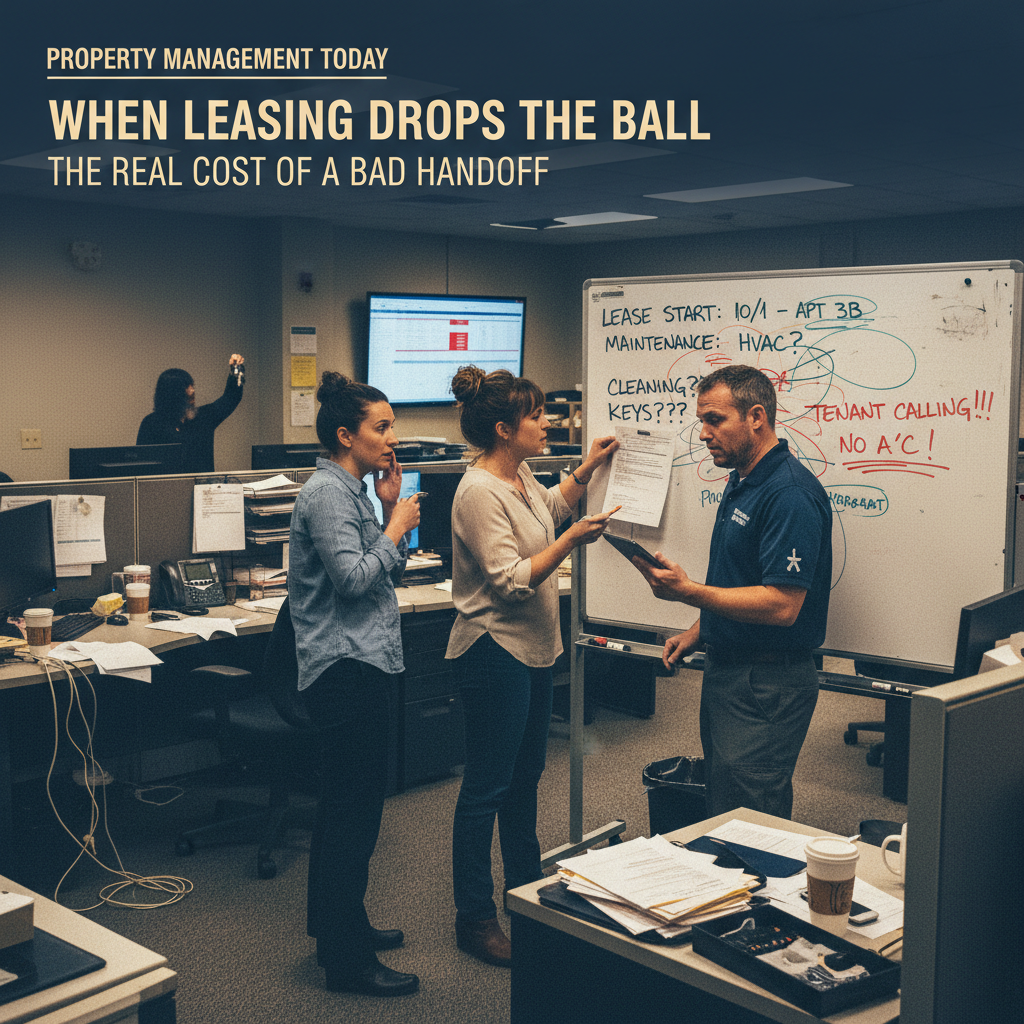
A bad handoff typically manifests in several ways. It could be incomplete resident files, missing lease addendums, uncommunicated special concessions, or even a lack of proper move-in coordination. Imagine a new resident arriving to a unit that hasn't been properly inspected, or finding out a promised amenity isn't available because the leasing agent failed to update the property manager. These initial negative experiences can sour a resident's perception of their new home and management from day one.
The immediate cost is often seen in increased administrative burden. Property managers and their support staff must spend valuable time chasing down missing information, correcting errors, and addressing resident complaints that could have been avoided. This diverts resources from more proactive tasks like preventative maintenance or community engagement. For properties using comprehensive platforms like AppFolio or Buildium, incomplete data entry during the leasing phase can lead to ongoing accounting discrepancies and operational inefficiencies that are difficult to untangle later.
Beyond administrative headaches, a poor handoff directly impacts resident retention. Studies show that a positive move-in experience is a strong predictor of long-term tenancy. When residents feel neglected or misled from the outset, their likelihood of renewing their lease decreases significantly. The cost of resident turnover, including lost rent, marketing expenses, and make-ready costs, can easily exceed several thousands of dollars per unit, per turn. NMHC research consistently highlights the importance of resident satisfaction in maintaining high occupancy rates.
Furthermore, a recurring pattern of bad handoffs can erode trust and create friction between the leasing and property management teams. This internal discord can lead to a blame culture, reduced collaboration, and a less efficient overall operation. Property managers may become wary of new residents coming from a particular leasing agent, anticipating problems before they even arise. This breakdown in inter-departmental communication is a common pain point discussed in industry forums like r/PropertyManagement on Reddit.
To mitigate these risks, organizations must prioritize clear communication protocols and standardized handoff procedures. Implementing checklists, shared digital platforms, and mandatory training sessions for both leasing and property management staff can ensure that all necessary information is transferred accurately and completely. Regular meetings between department heads to review handoff successes and failures can also foster a culture of continuous improvement. Platforms like Yardi and Entrata offer integrated solutions that can streamline this process, ensuring data consistency from lead to lease to resident management.
Ultimately, the goal is to create a seamless experience for the resident and an efficient workflow for the staff. When leasing truly "hands off the ball" with precision and completeness, property management can pick it up and run with it, ensuring happy residents and a healthy bottom line. Ignoring the critical nature of this transition is to risk not just a dropped ball, but a fumbled season.